
A second opinion in cancer care is most valuable when a patient is newly diagnosed, when treatment decisions involve major interventions such as chemotherapy or surgery, or when multiple treatment pathways are possible. A structured review of pathology reports, imaging studies, and molecular biomarkers can sometimes refine staging or identify additional therapeutic options. In modern oncology, second opinions are increasingly used to evaluate precision oncology approaches, including targeted therapy and immunotherapy.
From a clinical perspective, oncology decisions are rarely binary. Careful review of diagnosis, staging, and biomarkers can meaningfully influence treatment strategy.
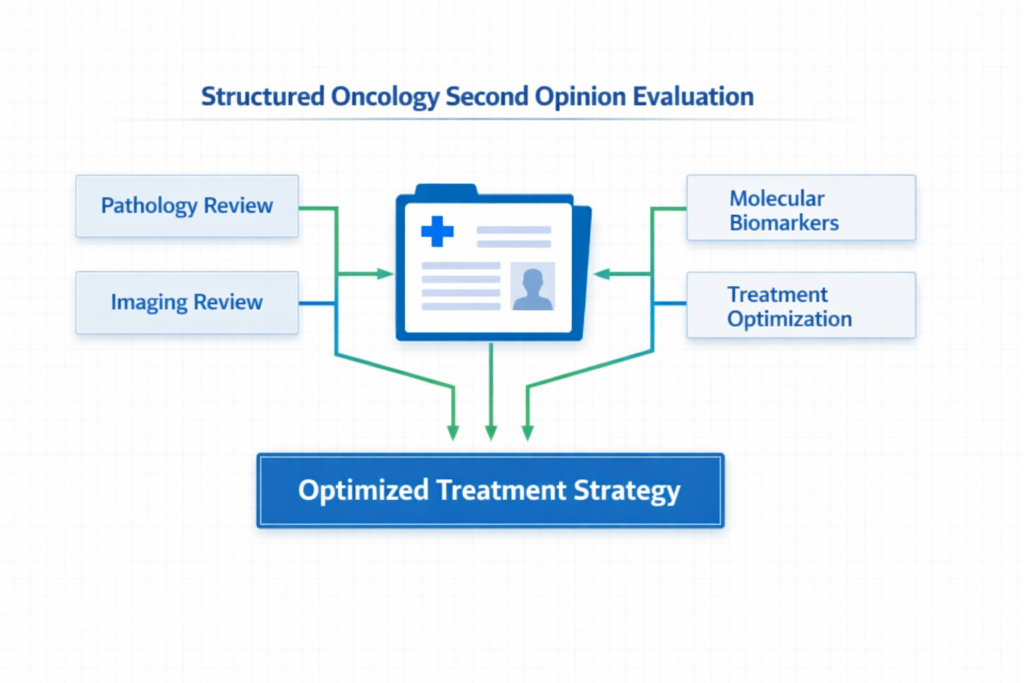
Structured clinical evaluation in oncology.
Why Are Second Opinions Important in Modern Cancer Care?
Cancer treatment has evolved significantly over the past decade. Many cancers now have multiple evidence-based treatment pathways depending on stage, molecular markers, and patient characteristics.
A second opinion allows an independent oncology specialist to review diagnostic findings and treatment recommendations before therapy begins.
This process can help confirm diagnosis, validate staging, and ensure that emerging treatments such as targeted therapy or immunotherapy are appropriately considered.
- Independent confirmation of cancer diagnosis
- Review of pathology and imaging interpretation
- Assessment of biomarker and molecular testing
- Evaluation of treatment sequencing options
- Clarification before major treatment decisions
In Which Situations Is a Second Opinion Most Valuable?
While a second opinion can be sought at any stage, certain clinical situations particularly benefit from structured expert review.
- New cancer diagnosis
- Rare or uncommon cancers
- Advanced or metastatic disease
- Before starting chemotherapy or immunotherapy
- Before major cancer surgery
- When treatment recommendations differ significantly
What Does a Structured Second Opinion Typically Involve?
A structured oncology second opinion is not simply a discussion. It involves a systematic evaluation of diagnostic evidence and treatment strategy.
This review may include reassessment of pathology slides, re-evaluation of imaging findings, and consideration of molecular biomarkers that may influence therapy.
- Detailed review of pathology reports
- Evaluation of imaging (CT, MRI, PET)
- Assessment of cancer stage and risk factors
- Molecular biomarker review
- Treatment sequencing analysis
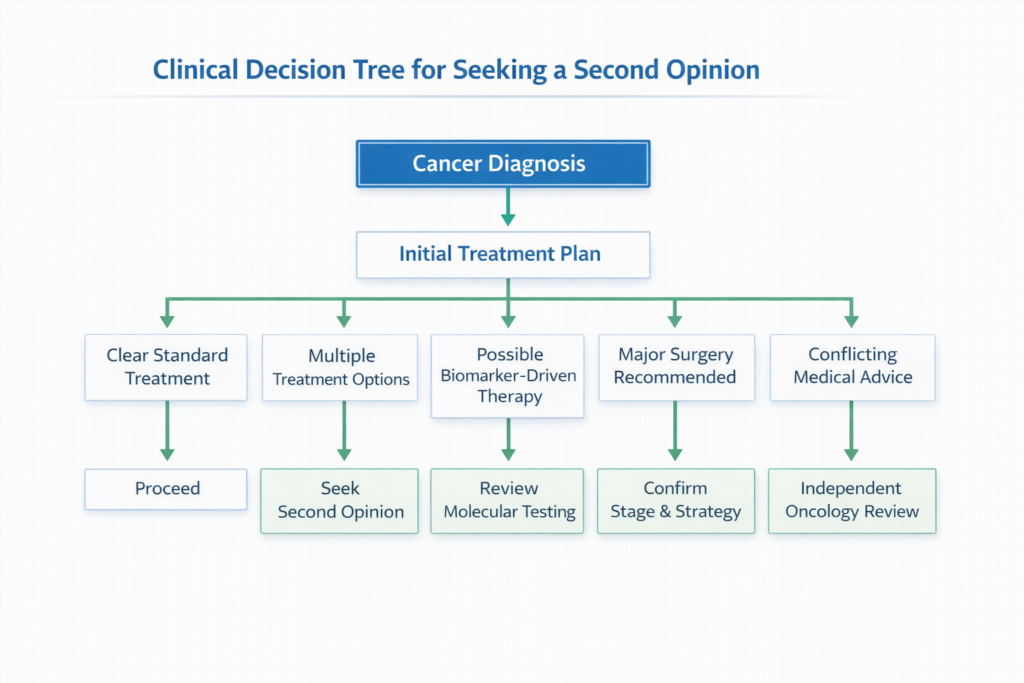
Structured review process in oncology second opinions involving pathology, imaging, and biomarker evaluation
Clinical Decision Framework for Seeking a Second Opinion
- If cancer diagnosis is newly established → Then confirm pathology and stage.
- If multiple treatment options exist → Then compare treatment sequencing strategies.
- If targeted therapy or immunotherapy may be possible → Then review molecular biomarkers.
- If major surgery is recommended → Then confirm staging and surgical indication.
- If treatment recommendations differ → Then obtain an independent oncology review.
How Precision Oncology Has Changed the Value of Second Opinions
The increasing role of molecular diagnostics has expanded the scope of oncology second opinions.
Today, treatment decisions may depend on biomarker findings such as gene mutations, protein expression, or tumor mutation burden.
A structured review can help determine whether additional molecular testing may influence treatment strategy.
What Records Should Patients Bring for a Second Opinion?
- Biopsy and pathology reports
- Radiology reports and imaging discs
- Previous treatment summaries
- Molecular or biomarker testing results
- Hospital discharge summaries
Frequently Asked Questions
Does seeking a second opinion delay cancer treatment?
In most cases, obtaining a second opinion can be arranged quickly and does not significantly delay treatment. It often helps confirm that the planned treatment approach is appropriate.
Can a second opinion change the treatment plan?
Sometimes. A review may confirm the original plan, refine staging, or identify additional treatment options depending on clinical findings.
Is molecular testing always reviewed during a second opinion?
Not always. However, when appropriate, biomarker testing and molecular profiling may be evaluated to determine eligibility for targeted therapy or immunotherapy.
Are second opinions common in oncology?
Yes. In complex diseases such as cancer, second opinions are widely accepted and often encouraged before major treatment decisions.
Can patients seek a second opinion after treatment has started?
Yes. Second opinions can be obtained at various stages of treatment, especially if disease response or treatment tolerance raises questions.
Clinical Perspective
In oncology practice, treatment planning often involves integrating pathology, imaging, molecular data, and patient-specific factors. A structured second opinion can provide additional clarity before initiating complex therapies.
As cancer treatment becomes increasingly personalized, careful review of available clinical and molecular information has become an important part of modern cancer care.
Educational Disclaimer
This article is intended for educational purposes only and should not replace individualized medical consultation. Cancer treatment decisions should always be made in discussion with a qualified oncology specialist based on the patient’s specific clinical situation.
Related Reads
Importance of Precision Oncology In Second Opinion
Pingback: Second Opinions : Improving Treatment Strategy In Cancer