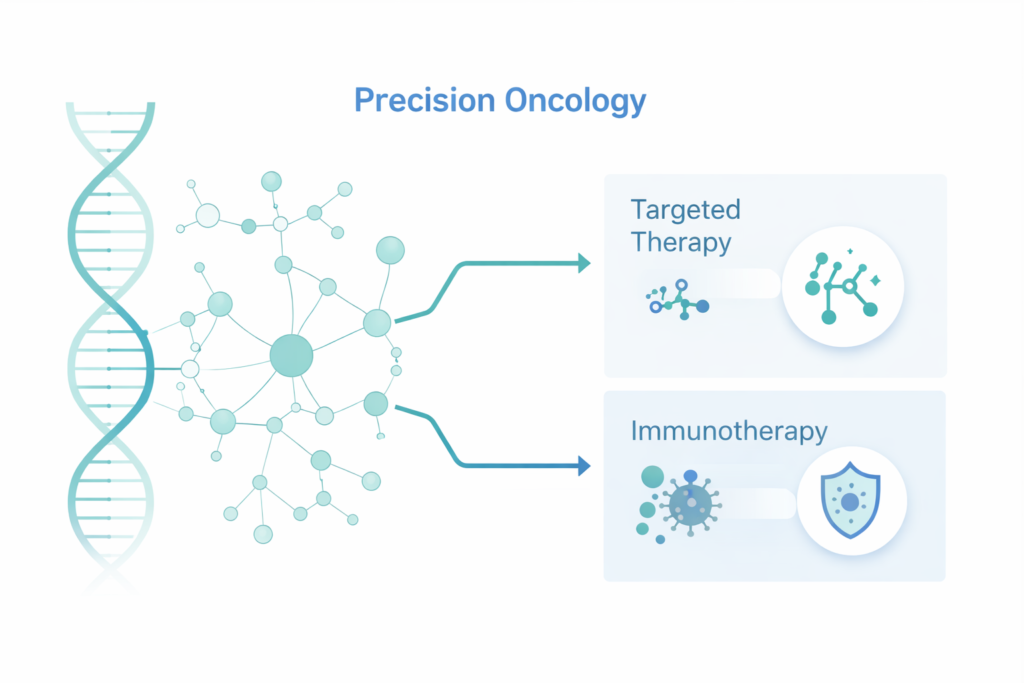
Precision oncology is a structured approach to cancer treatment that integrates tumor biology, molecular profiling, and patient-specific clinical factors to guide therapy selection. Rather than relying solely on tumor location, modern oncology increasingly uses genomic, proteomic, and biomarker data to match patients with targeted therapies or immunotherapy. This improves treatment relevance, reduces unnecessary toxicity, and enables more rational sequencing of care.
As a consultant medical oncologist working extensively in biomarker-driven decision-making, I have seen how molecular stratification reshapes treatment pathways across cancer types.
What Problem Was Precision Oncology Designed to Solve?
Traditional oncology classified cancers primarily by organ of origin. While effective in many scenarios, this model did not account for the biological heterogeneity within the same tumor type.
- Two patients with the same stage lung cancer may have entirely different driver mutations.
- Response to chemotherapy can vary widely based on tumor biology.
- Immunotherapy efficacy depends on biomarker expression such as PD-L1 or MSI status.
Precision oncology addresses this variability by integrating molecular diagnostics into frontline decision-making.
How Does Molecular Profiling Change Treatment Selection?
Comprehensive molecular testing—often via next-generation sequencing (NGS)—identifies actionable alterations that may guide therapy.
- If an actionable mutation is detected → targeted therapy may be preferred.
- If high tumor mutational burden or MSI-high → consider immunotherapy.
- If no actionable markers → standard chemotherapy or combination strategies.
- If resistance mutation appears → modify or sequence therapy accordingly.
This logic introduces biological precision into what was historically protocol-driven treatment.
What Is the Structured Decision Logic in Precision Oncology?
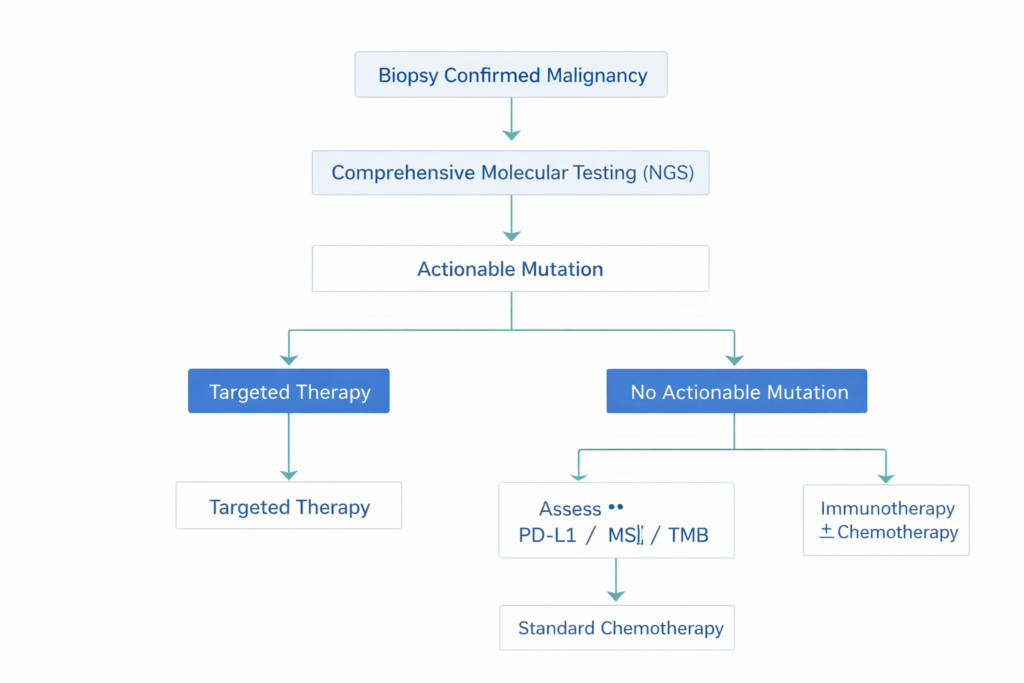
Structured molecular testing enables biologically guided cancer treatment decisions
How Does Precision Oncology Improve Treatment Sequencing?
Precision oncology is not merely about selecting first-line therapy. It informs resistance monitoring, progression analysis, and rational sequencing.
- Liquid biopsy for emerging resistance mutations.
- Switching targeted agents when secondary mutations develop.
- Escalation or de-escalation strategies based on response kinetics.
Where Does Second Opinion Fit in Precision Oncology?
Complex molecular reports can be misinterpreted or underutilized. A structured second opinion ensures that:
- All actionable biomarkers are reviewed.
- Treatment sequencing is optimized.
- International guideline alignment is confirmed.
- Unnecessary toxicity is avoided.
FAQ: Precision Oncology
Is precision oncology only for advanced cancer?
No. Molecular profiling increasingly informs early-stage treatment and adjuvant decisions in several cancer types.
Does every patient need genomic testing?
Testing depends on tumor type, stage, and clinical context. Not all cancers require broad NGS panels.
Is targeted therapy always better than chemotherapy?
No. Targeted therapy is superior only when a validated actionable mutation exists.
Can resistance develop to targeted therapy?
Yes. Secondary mutations may emerge, requiring therapy modification.
Is precision oncology available in India?
Advanced molecular diagnostics are increasingly accessible in major oncology centers.
Related Articles
• Molecular Profiling in Lung Cancer
• Cancer Genetics vs Tumor Genomics
• When to Seek a Structured Second Opinion
Closing Perspective
Precision oncology represents the maturation of cancer medicine—from protocol-based treatment to biologically guided care. The future of oncology lies not merely in stronger drugs, but in smarter selection.
Educational Disclaimer: This article is for educational purposes only and does not substitute individualized medical advice. Treatment decisions must be made in consultation with a qualified oncology specialist.