Pillar: Treatment Strategy & Second Opinions
Direct Answer: A structured second opinion in oncology is a systematic re-evaluation of diagnosis, staging, pathology, molecular data, and treatment sequencing. It does not replace the primary oncologist but strengthens decision clarity. In complex cancers, even small refinements in staging or biomarker interpretation can significantly influence outcomes and long-term toxicity.
In modern oncology, treatment decisions increasingly depend on precision diagnostics and structured interpretation. A second review adds depth — not duplication.
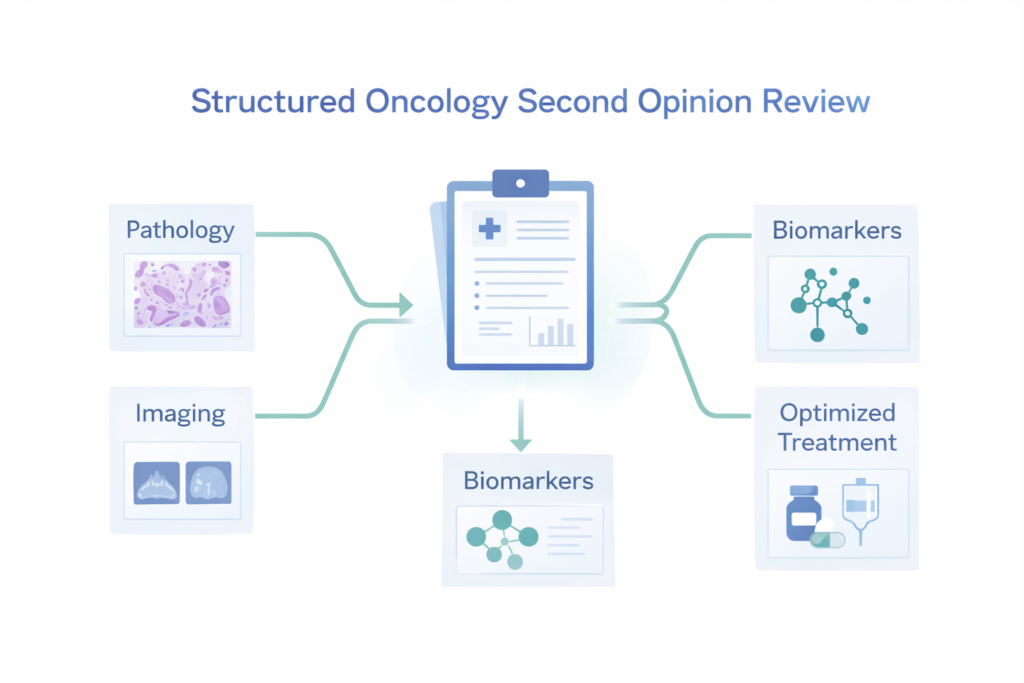
Structured review refines diagnosis, staging, and treatment sequencing in oncology.
What Does a Structured Second Opinion Actually Reassess?
A proper second opinion follows a checklist-based framework rather than a superficial confirmation.
- Histopathology confirmation.
- Imaging-based staging accuracy.
- Molecular and biomarker interpretation.
- Treatment sequencing and toxicity planning.
- Guideline alignment with international standards.
Often, clarity emerges not from disagreement, but from refinement.
When Is a Second Opinion Most Valuable?
- Newly diagnosed complex cancers.
- Rare tumor types.
- Before starting chemotherapy or immunotherapy.
- When surgery is extensive or high-risk.
- At disease progression or relapse.
Early review prevents reactive decision-making later.
How Does Decision Logic Improve with Structured Review?
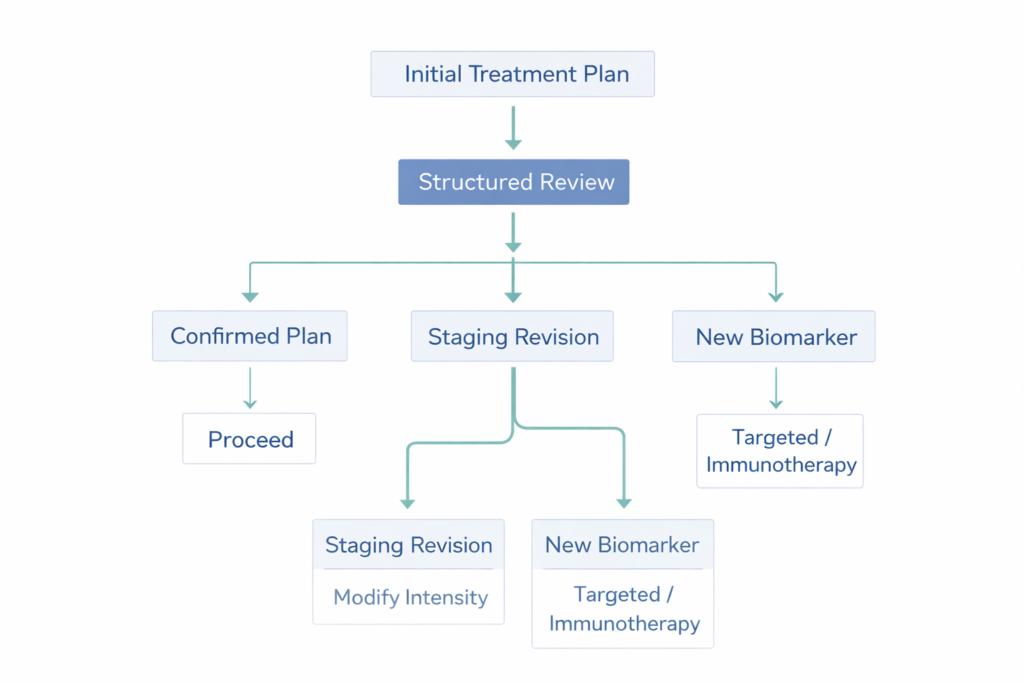
Oncology second opinion decision-tree.
Does a Second Opinion Delay Treatment?
In most cases, structured review can be completed within days. The goal is not delay but clarity. Timely refinement is preferable to premature escalation.
How Does This Align with Precision Oncology?
Modern treatment increasingly depends on biomarker-driven selection. A second review ensures molecular findings are interpreted within clinical context.
- Avoids unnecessary chemotherapy.
- Prevents missing actionable mutations.
- Ensures appropriate sequencing.
FAQ: Second Opinions in Cancer Care
Is seeking a second opinion a sign of distrust?
No. It reflects responsible medical decision-making in complex disease.
Will my primary doctor be offended?
Most oncology teams support structured review in high-stakes cases.
Can treatment plans change significantly?
In some cases, staging or biomarker interpretation can meaningfully alter therapy choice.
Is a second opinion useful after starting treatment?
Yes. Especially if response is suboptimal or toxicity is excessive.
Is remote review possible?
With digital reports and imaging, structured review can often be conducted remotely.
Related Articles
• Precision Oncology and Molecular Profiling
• Genetic Testing in Cancer Care
• Treatment Sequencing in Advanced Cancer
Closing Perspective
A structured second opinion enhances clarity, confidence, and alignment with evolving oncology standards. In high-stakes decisions, verification strengthens strategy.
Educational Disclaimer: This article is for educational purposes only and does not replace individualized medical advice. Treatment decisions should be made in consultation with a qualified oncology specialist.
Pingback: Molecular Subtypes of Breast Cancer