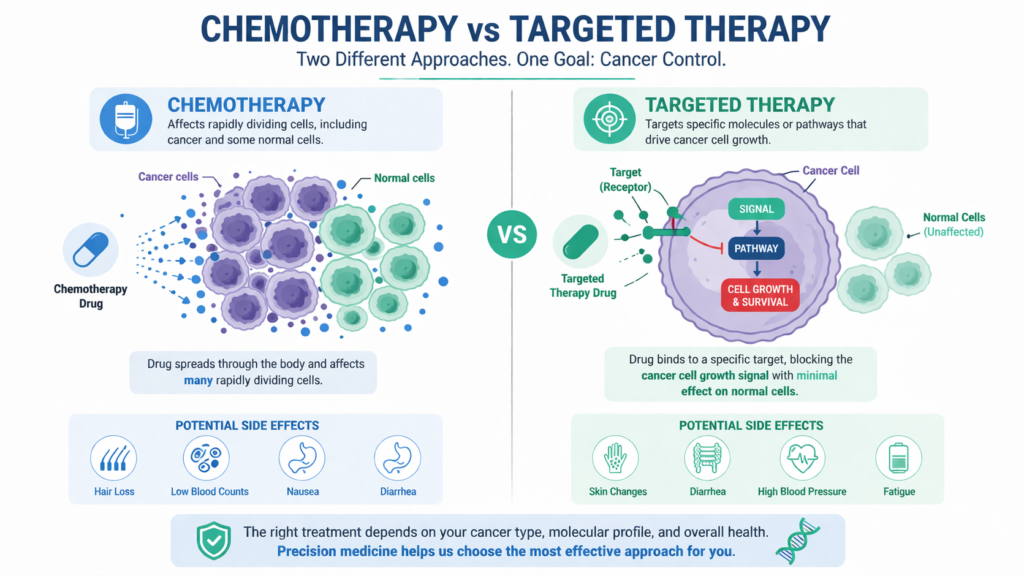
Direct Answer:Targeted Therapy and Chemotherapy are two fundamental approaches used in cancer treatment, but they work in very different ways. Chemotherapy affects rapidly dividing cells broadly, while targeted therapy focuses on specific molecular abnormalities within cancer cells. Understanding this distinction is central to modern precision oncology, where treatment decisions are increasingly guided by tumor biology rather than only cancer stage.
In contemporary oncology practice, molecular testing and biomarker analysis frequently determine whether a patient may benefit more from targeted therapy, chemotherapy, or a carefully sequenced combination of both.
Perspective: In modern cancer care, treatment selection is increasingly guided by tumor biology and molecular drivers rather than relying solely on traditional chemotherapy protocols.
How Does Chemotherapy Work?
Chemotherapy is one of the oldest systemic cancer treatments. These drugs act by damaging DNA or interfering with cell division, which affects rapidly growing cells throughout the body.
Because cancer cells tend to divide faster than most normal cells, chemotherapy can effectively reduce tumor burden across many cancer types.
However, chemotherapy does not distinguish perfectly between cancer cells and normal rapidly dividing cells. This explains common side effects such as hair loss, reduced blood counts, and gastrointestinal symptoms.
- Acts on rapidly dividing cells
- Effective across many cancer types
- Often used when molecular targets are absent
- Can be used before surgery, after surgery, or in metastatic disease
What Is Targeted Therapy in Cancer Treatment?
Targeted therapy represents a major shift in oncology. These drugs are designed to block specific molecular pathways that drive cancer growth.
Instead of affecting all rapidly dividing cells, targeted drugs interfere with proteins, receptors, or genetic mutations that cancer cells rely on for survival.
- EGFR inhibitors in lung cancer
- HER2-targeted therapy in breast cancer
- BRAF inhibitors in melanoma
- PARP inhibitors in BRCA-mutated cancers
The key requirement for targeted therapy is the presence of a relevant molecular biomarker. Without the appropriate mutation or pathway activation, these drugs may not provide benefit.
Key Differences Between Targeted Therapy and Chemotherapy
- Mechanism: Chemotherapy affects cell division broadly, while targeted therapy blocks specific molecular drivers.
- Patient Selection: Targeted therapy requires biomarker testing.
- Side Effect Profiles: Targeted therapies often produce different, sometimes milder, toxicity patterns.
- Precision: Targeted therapy aligns with the principles of precision oncology.
Despite these differences, chemotherapy remains an essential component of cancer treatment, particularly in cancers where actionable molecular targets are absent.
Clinical Decision Pathway: Choosing Between Targeted Therapy and Chemotherapy
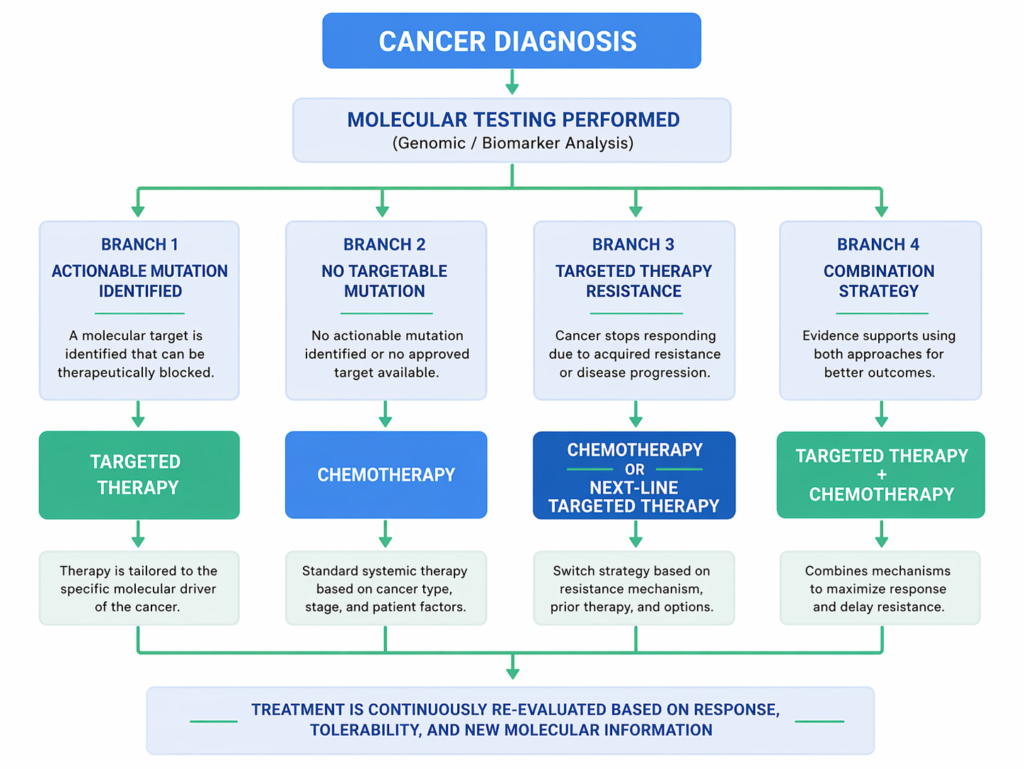
Modern treatment planning often follows a structured clinical logic based on tumor biology.
- If molecular testing identifies an actionable mutation → targeted therapy may be considered.
- If no actionable mutation is present → chemotherapy may remain the primary systemic treatment.
- If targeted therapy resistance develops → chemotherapy or combination therapy may follow.
- If tumor biology supports both strategies → sequential or combination therapy may be used.
When Does a Second Opinion Become Useful?
In complex cancers, treatment strategies may vary depending on molecular interpretation, disease stage, and patient-specific factors.
A structured second opinion may help clarify:
- whether molecular testing has been adequately performed
- if targeted therapy options have been fully evaluated
- how treatment sequencing should be planned
- whether clinical trial options exist
Such discussions are increasingly relevant in precision oncology, where subtle biomarker interpretation can influence therapy selection.
Frequently Asked Questions
Is targeted therapy always better than chemotherapy?
No. Targeted therapy works best when a specific molecular driver is present. In many cancers, chemotherapy remains an important and effective treatment.
Do targeted therapies have fewer side effects?
Targeted therapies often produce different side effects, such as skin changes or hypertension, rather than the traditional chemotherapy effects like hair loss or severe nausea.
Can chemotherapy and targeted therapy be used together?
Yes. In several cancers, combined treatment strategies improve outcomes.
Does every cancer require molecular testing?
Many cancers now benefit from molecular testing, particularly lung cancer, breast cancer, melanoma, and colorectal cancer.
What happens if targeted therapy stops working?
Resistance can develop. At that point, doctors may consider chemotherapy, alternative targeted drugs, or clinical trials.
Related Articles
- What Is Precision Oncology?
- What Is Molecular Profiling in Cancer?
- How Biomarker Testing Changes Cancer Treatment
Closing Perspective
The distinction between chemotherapy and targeted therapy reflects the broader evolution of oncology toward biologically informed treatment strategies. As molecular diagnostics become increasingly integrated into clinical practice, treatment decisions are progressively guided by the underlying drivers of cancer rather than by tumor location alone.
Understanding these differences helps patients and clinicians engage in more informed discussions about treatment pathways within the framework of precision oncology.
Educational Disclaimer
This article is intended for educational purposes and should not replace individualized medical consultation. Cancer treatment decisions should always be made in discussion with a qualified oncology specialist.