Many cancer survivors retain the possibility of having children after treatment, although fertility outcomes depend on factors such as age, treatment type, and baseline reproductive health. Chemotherapy, radiation therapy, and certain surgeries may affect reproductive capacity, but recovery of fertility can occur months to years after treatment in some individuals.Modern oncology care increasingly integrates fertility counseling, reproductive monitoring, and assisted reproductive technologies to support survivorship and long-term quality of life.
As cancer survival rates improve globally, fertility preservation and reproductive health have become an increasingly important component of survivorship care, particularly among adolescents and young adults.
How Does Cancer Treatment Affect Fertility Long Term?
The long-term impact of cancer therapy on fertility varies widely depending on treatment intensity, radiation exposure, and patient age at the time of therapy.Some reproductive cells may recover over time, while in other situations permanent infertility may occur.
- High-dose chemotherapy may damage ovarian follicles or sperm-producing cells
- Pelvic radiation can affect reproductive organs and hormonal regulation
- Bone marrow transplantation may involve treatments that impair fertility
- Surgical procedures may remove reproductive organs or alter reproductive pathways
Because these effects vary significantly between individuals, fertility outcomes are best evaluated through structured survivorship assessments.
When Can Pregnancy Be Considered After Cancer Treatment?
The recommended timing for attempting pregnancy depends on cancer type, treatment received, and risk of disease recurrence.In many cases, clinicians recommend waiting for a defined observation period to ensure cancer stability and allow the body to recover.
- Many oncologists advise waiting 1–2 years after treatment
- Hormone-sensitive cancers may require longer monitoring
- Fertility evaluation may include hormone testing and imaging
- Reproductive specialists may assist with assisted reproductive techniques
These recommendations should always be individualized through coordinated oncology and reproductive medicine consultation.
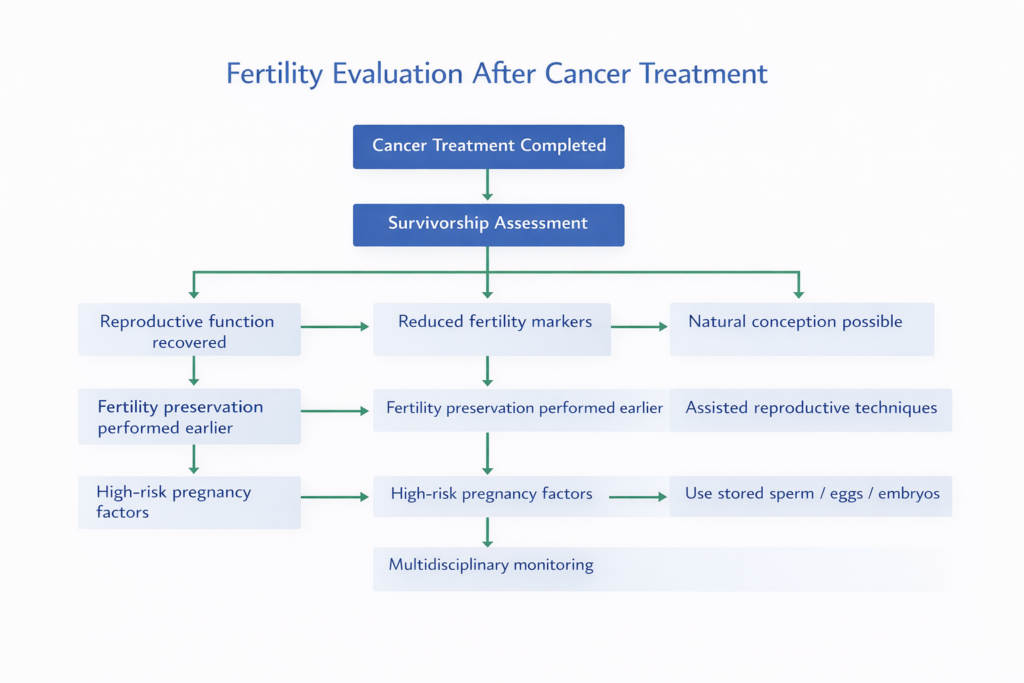
Clinical Decision Pathway for Fertility After Cancer Treatment
A structured approach helps evaluate reproductive potential in cancer survivors.
- If patient has completed cancer therapy → Then begin survivorship fertility assessment.
- If ovarian or testicular function has recovered → Then natural conception may be possible.
- If fertility markers are reduced → Then consider assisted reproductive technologies.
- If fertility preservation was performed before treatment → Then evaluate stored reproductive material.
- If pregnancy risk requires monitoring → Then coordinate oncology and obstetric care.
This pathway ensures that survivorship care addresses reproductive health while maintaining oncologic safety.
How Does Survivorship Care Support Fertility?
Comprehensive survivorship programs increasingly incorporate reproductive health monitoring. Fertility testing, hormonal assessment, and reproductive counseling may help survivors make informed family-planning decisions.Multidisciplinary care involving oncologists, reproductive endocrinologists, and obstetric specialists helps ensure that pregnancy planning occurs safely.
Frequently Asked Questions
Can cancer survivors safely have children?
Many cancer survivors successfully have children after treatment. Fertility outcomes depend on treatment type and individual recovery.
Does chemotherapy permanently damage fertility?
Some chemotherapy regimens affect fertility temporarily, while others may cause long-term effects.
Is pregnancy safe after cancer?
In many situations pregnancy is considered safe after a recommended observation period and oncologic clearance.
Can frozen eggs or sperm be used after cancer treatment?
Yes. Cryopreserved reproductive material can be used through assisted reproductive technologies.
Should cancer survivors see a fertility specialist?
Consulting a reproductive specialist can help evaluate fertility potential and discuss available reproductive options.
Clinical Perspective
As survival outcomes improve, oncology care increasingly extends beyond disease control to encompass survivorship and long-term wellbeing. Addressing fertility after cancer treatment allows survivors to consider future family planning while maintaining safe and evidence-based medical follow-up.
Educational Disclaimer:
This article is intended for educational purposes only and should not replace individualized medical advice. Patients should consult their oncology and reproductive medicine specialists for personalized guidance.
Related Articles
Fertility Preservation Before Cancer Treatment
Individualizing Cancer Treatment in the Elderly and Young Adults
Pingback: Fertility Preservation Before Cancer Treatment