Certain cancer treatments such as chemotherapy, radiotherapy, and pelvic surgery can impair fertility by damaging reproductive cells or hormonal pathways. Fertility preservation allows patients to safeguard future reproductive potential before initiating cancer therapy. Techniques such as sperm banking, egg freezing, embryo cryopreservation, and ovarian tissue preservation are now standard components of modern oncologic care for eligible patients.Discussing fertility early in the treatment planning phase helps ensure that cancer therapy proceeds without compromising long-term quality of life for younger patients.
From a clinical perspective, integrating fertility preservation discussions into initial oncology consultations is increasingly considered a standard component of comprehensive cancer care for adolescents and young adults.
Why Can Cancer Treatment Affect Fertility?
Many cancer therapies target rapidly dividing cells. While effective against malignant cells, these treatments may also affect reproductive cells and hormonal systems involved in fertility.The degree of fertility impact depends on several factors including the type of cancer therapy, patient age, baseline reproductive health, and treatment intensity.
- Chemotherapy drugs that damage ovarian follicles or sperm-producing cells
- Radiation therapy affecting the pelvis or reproductive organs
- Surgical removal of reproductive structures
- Hormonal therapy altering reproductive endocrine pathways
For younger patients in particular, these risks make fertility counseling an essential step before starting treatment.
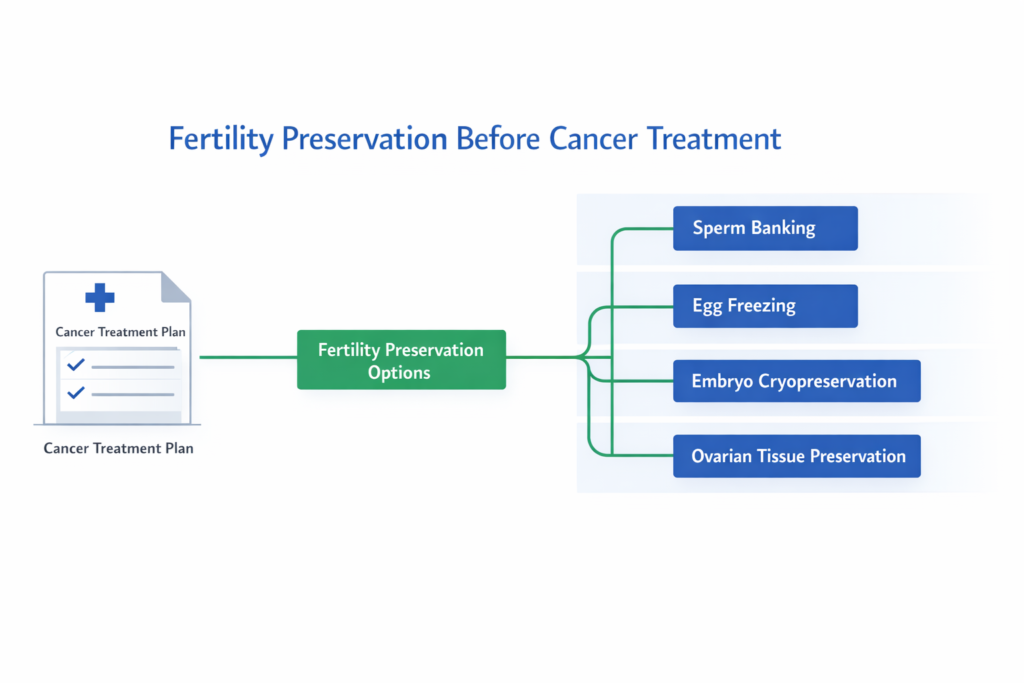
Which Fertility Preservation Options Are Available?
The choice of fertility preservation technique depends on patient gender, time available before treatment begins, and individual clinical circumstances.
- Sperm banking: Cryopreservation of sperm prior to chemotherapy or radiation.
- Egg freezing (oocyte cryopreservation): Retrieval and freezing of mature eggs.
- Embryo cryopreservation: Fertilized embryos stored for future use.
- Ovarian tissue preservation: Surgical removal and freezing of ovarian tissue.
- Ovarian suppression medications: Temporary hormonal suppression during chemotherapy.
Early referral to reproductive specialists allows these procedures to be coordinated without delaying cancer treatment.
When Should Fertility Preservation Be Considered?
Fertility preservation should ideally be discussed immediately after diagnosis and before starting cancer therapy.
- Adolescents and young adults receiving chemotherapy
- Patients undergoing pelvic radiation
- Individuals requiring bone marrow transplantation
- Patients undergoing surgery affecting reproductive organs
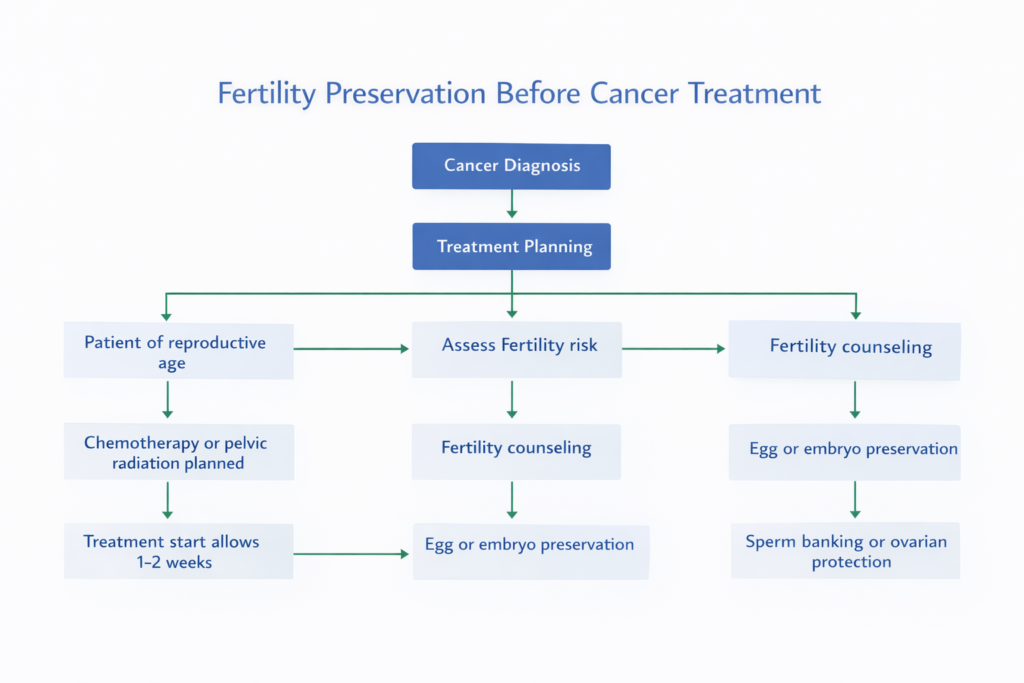
Fertility preservation Before Cancer Treatment
Clinical Decision Pathway for Fertility Preservation
Oncologists often use a structured approach to determine whether fertility preservation is appropriate.
- If the patient is of reproductive age → Then initiate fertility counseling.
- If chemotherapy or pelvic radiation is planned → Then assess fertility risk.
- If treatment start allows 1–2 weeks → Then consider egg or embryo preservation.
- If treatment must begin urgently → Then evaluate sperm banking or ovarian protection.
- If reproductive organs will be surgically affected → Then explore tissue cryopreservation.
This structured pathway ensures that fertility considerations are addressed without compromising timely cancer treatment.
Why Is a Treatment Strategy Review Important?
Fertility preservation decisions often intersect with broader cancer treatment planning. A comprehensive review of diagnosis, staging, and therapeutic options can clarify whether fertility-sparing strategies are possible.In certain cancers, treatment sequencing or surgical approach may be adjusted to preserve reproductive potential without affecting oncologic outcomes.
Frequently Asked Questions
Will fertility preservation delay cancer treatment?
In many cases, fertility procedures can be completed within 1–2 weeks and coordinated alongside oncology planning without meaningful treatment delay.
Does chemotherapy always cause infertility?
Not always. The impact depends on the specific drugs used, treatment duration, and patient age.
Can men preserve fertility before cancer treatment?
Yes. Sperm banking is a widely available and effective fertility preservation method.
Is egg freezing safe before chemotherapy?
Egg freezing is a well-established technique and can often be performed before treatment begins.
Is fertility preservation available for adolescents?
Specialized fertility preservation techniques may be available for adolescents depending on clinical circumstances.
Clinical Perspective
As cancer survival improves, long-term quality-of-life considerations such as fertility are becoming increasingly important in oncology care. Early counseling and structured treatment planning help ensure that patients can pursue effective cancer therapy while preserving future reproductive options whenever medically feasible.
Educational Disclaimer:
This article is intended for educational purposes only and should not replace personalized medical consultation. Treatment decisions should always be made in discussion with a qualified oncology and reproductive medicine team.
Related Articles
Precision Oncology and Treatment Personalisation
Fertility After Cancer Treatment: What Survivors Need to Know
Pingback: Fertility after cancer treatment - What Survivors need