A structured second opinion in oncology is a systematic re-evaluation of diagnosis, staging, pathology, molecular data, and treatment sequencing. It does not replace the primary oncologist but strengthens decision clarity. In complex cancers, even small refinements in staging or biomarker interpretation can significantly influence outcomes and long-term toxicity.
In modern oncology, treatment decisions increasingly depend on precision diagnostics and structured interpretation. A second review adds depth — not duplication.
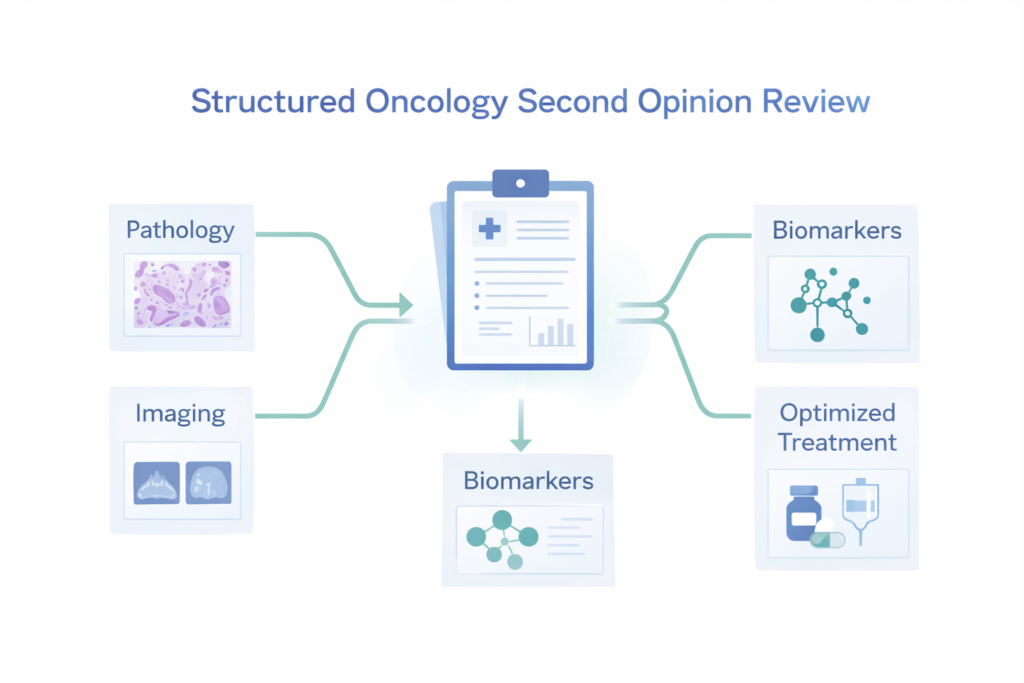
Structured review refines diagnosis, staging, and treatment sequencing in oncology.
What Does a Structured Second Opinion Actually Reassess?
A proper second opinion follows a checklist-based framework rather than a superficial confirmation.
- Histopathology confirmation.
- Imaging-based staging accuracy.
- Molecular and biomarker interpretation.
- Treatment sequencing and toxicity planning.
- Guideline alignment with international standards.
Often, clarity emerges not from disagreement, but from refinement.
When Is a Second Opinion Most Valuable?
- Newly diagnosed complex cancers.
- Rare tumor types.
- Before starting chemotherapy or immunotherapy.
- When surgery is extensive or high-risk.
- At disease progression or relapse.
Early review prevents reactive decision-making later.
How Does Decision Logic Improve with Structured Review?
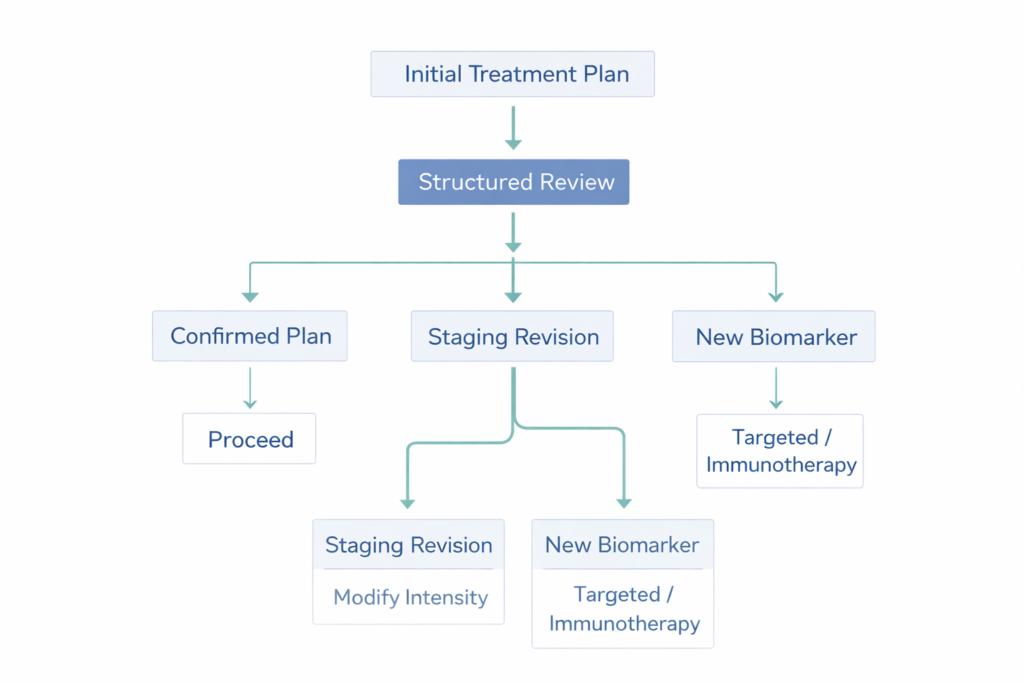
Oncology second opinion decision-tree.
Does a Second Opinion Delay Treatment?
In most cases, structured review can be completed within days. The goal is not delay but clarity. Timely refinement is preferable to premature escalation.
How Does This Align with Precision Oncology?
Modern treatment increasingly depends on biomarker-driven selection. A second review ensures molecular findings are interpreted within clinical context.
- Avoids unnecessary chemotherapy.
- Prevents missing actionable mutations.
- Ensures appropriate sequencing.
Frequently Asked Questions: Second Opinions in Cancer Care
Is seeking a second opinion a sign of distrust toward my doctor?
No. Seeking a second opinion is widely considered a responsible and thoughtful step when dealing with a complex disease like cancer. Cancer treatment decisions often involve multiple options—such as surgery, chemotherapy, targeted therapy, or immunotherapy—and each option may depend on precise interpretation of pathology, imaging, and molecular tests. A second opinion allows another oncology specialist to review these details and confirm that the diagnosis, staging, and treatment strategy are appropriate. Rather than reflecting distrust, it demonstrates that a patient wants to make a well-informed decision about a serious health condition.
Will my primary doctor be offended if I seek another opinion?
In most cases, experienced oncology teams fully support patients who wish to obtain a second opinion. Cancer care is increasingly multidisciplinary, and consultation between specialists is common in clinical practice. Many doctors actually encourage second opinions when treatment decisions are complex, when advanced therapies are being considered, or when the disease behaves in an unusual way. The goal is always the same—ensuring that the patient receives the most appropriate and evidence-based care.
Can a second opinion significantly change the treatment plan?
Sometimes it can. While many second opinions confirm the original plan, there are situations where additional review of pathology, imaging scans, or molecular biomarkers leads to a different interpretation of the disease. This can result in changes in staging, identification of targeted therapies, or adjustments in the overall treatment strategy. In certain cancers, biomarker-driven therapy or immunotherapy options may become clearer after a detailed review.
Is a second opinion still useful if treatment has already started?
Yes. Patients may seek a second opinion at any stage of their cancer journey. It can be particularly valuable if the response to treatment is not as expected, if side effects are difficult to manage, or if a major treatment decision such as surgery or switching therapies needs to be reconsidered.
Can a second opinion be obtained remotely?
In many cases, yes. With digital medical records, pathology reports, imaging scans, and molecular test results, a structured review can often be performed remotely. This allows patients to access expert oncology opinions even when they are unable to travel, helping them make informed decisions about their treatment plan.
Related Articles
When to Seek Second Opinion In Cancer ?
Individualizing Cancer Treatment in the Elderly and Young Adults
Closing Perspective
A structured second opinion enhances clarity, confidence, and alignment with evolving oncology standards. In high-stakes decisions, verification strengthens strategy.
Educational Disclaimer: This article is for educational purposes only and does not replace individualized medical advice. Treatment decisions should be made in consultation with a qualified oncology specialist.
Pingback: Molecular Subtypes of Breast Cancer
Pingback: Genetic Testing in Cancer: When It Matters for Treatment