Molecular profiling in lung cancer identifies specific genetic alterations within a tumor that determine which therapy is most biologically appropriate. Instead of selecting treatment based only on stage or histology, oncologists now use biomarkers such as EGFR, ALK, ROS1, KRAS, MET, RET, and PD-L1 expression to guide targeted therapy or immunotherapy decisions. This precision-based approach improves response rates and avoids ineffective treatment strategies.
Clinical perspective: As a Consultant Medical Oncologist in Delhi with a focus on precision oncology and cancer genetics, I consider comprehensive molecular profiling essential before initiating systemic therapy in advanced lung cancer.
Understanding Molecular Profiling in Lung Cancer
Molecular profiling refers to next-generation sequencing (NGS) or other advanced biomarker testing methods that analyze the genetic and molecular characteristics of a tumor. In non-small cell lung cancer (NSCLC), this process identifies driver mutations responsible for tumor growth.
These genetic alterations are not detectable through imaging alone. They require tissue biopsy or liquid biopsy to uncover the molecular architecture of the disease.
Precision oncology shifts the treatment paradigm from “one-size-fits-all” to biologically guided therapy selection.
Why Molecular Testing Must Precede Treatment
Two patients with identical stage lung cancer may have entirely different molecular drivers. Initiating chemotherapy without biomarker testing may lead to suboptimal outcomes in patients who are eligible for targeted therapy.
- Presence of actionable mutation
- PD-L1 expression level
- Tumor mutational burden
- Patient’s clinical performance status
In modern practice, treatment decisions follow molecular data — not assumptions.
Key Biomarkers That Influence Therapy Selection
- EGFR mutation: Indicates benefit from EGFR tyrosine kinase inhibitors.
- ALK rearrangement: Guides ALK-targeted therapy.
- ROS1 rearrangement: Responsive to ROS1 inhibitors.
- KRAS G12C mutation: Now targetable in selected cases.
- MET exon 14 skipping: Guides MET inhibitor therapy.
- RET fusion: Targeted RET-directed drugs available.
- PD-L1 expression: Determines immunotherapy eligibility.
How Molecular Findings Change the Treatment Pathway
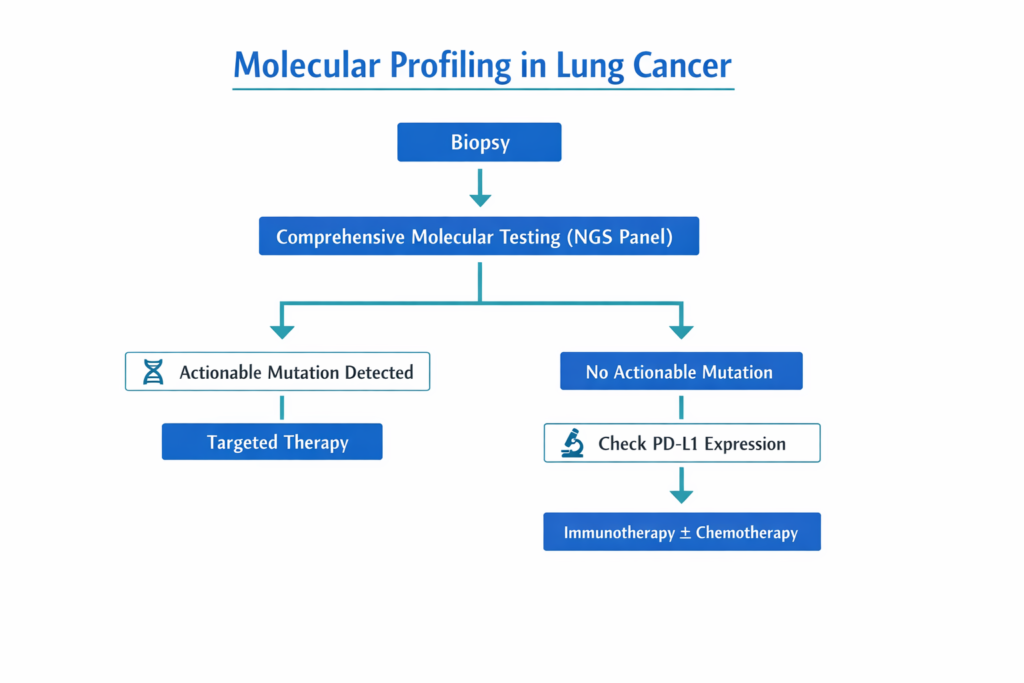
- If an actionable mutation is detected: Targeted therapy is preferred as first-line treatment.
- If no actionable mutation is found: Treatment is guided by PD-L1 levels and risk profile.
- If testing is incomplete: Repeat biopsy or expanded NGS panel may be necessary.
This algorithmic decision-making reflects the core principles of precision oncology.
When Should a Structured Second Opinion Be Considered?
- Treatment initiated without full biomarker panel
- Unclear interpretation of molecular report
- Complex mutation combinations
- Unexpected progression despite therapy
Frequently Asked Questions
Is molecular profiling mandatory in advanced lung cancer?
Yes, comprehensive molecular testing is strongly recommended before starting systemic therapy in advanced non-small cell lung cancer.
How long does next-generation sequencing take?
Turnaround time typically ranges between 7–14 days depending on laboratory workflow.
Does every mutation have a targeted therapy?
Not all detected mutations are actionable, but the number of targetable alterations continues to expand with ongoing research.
Closing Perspective
Molecular profiling has fundamentally transformed lung cancer care by aligning therapy with tumor biology. This shift from generalized treatment to biomarker-driven strategy defines modern precision oncology. In complex cases, structured interpretation of molecular reports can meaningfully influence outcomes.
Disclaimer: This content is educational and does not replace individualized medical consultation. Treatment decisions depend on clinical stage, pathology findings, and comprehensive molecular evaluation.
Related read
The Foundations of Precision Oncology in Modern Cancer Care
Molecular Subtypes Across Common Cancers: Why Biology Matters More Than Stage
Pingback: Precision Oncology Cancer Treatment